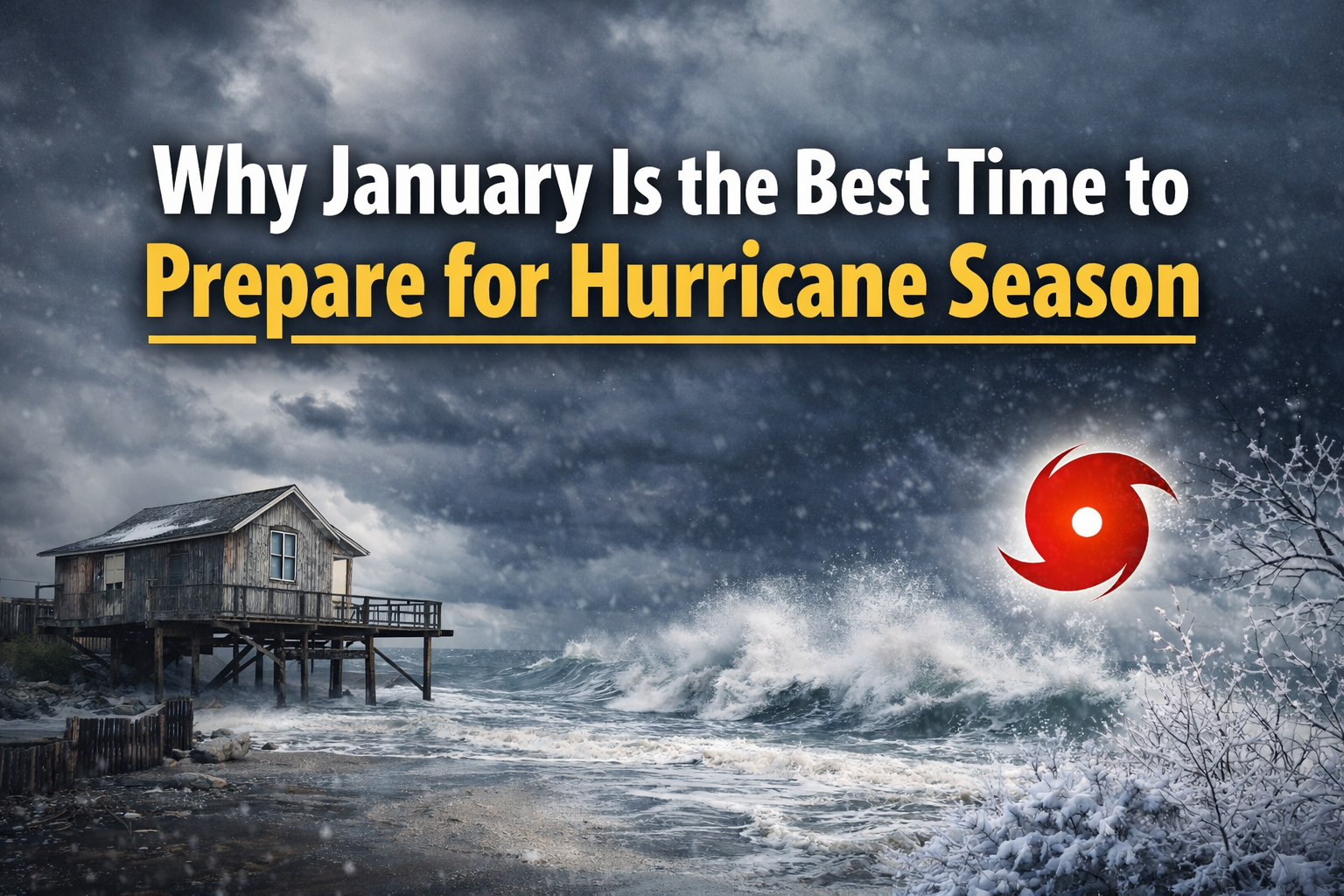
Most people don’t think about hurricanes in January. Storms feel far away, shelves are fully stocked, and life feels normal. But that’s exactly why January is the best time to prepare for hurricane season.
Hurricane preparedness isn’t about reacting when a storm is announced — it’s about being ready long before one forms. Preparing early gives you more options, lower costs, and far less stress when it actually matters.
This guide explains why January is the smartest month to start, what you should focus on now, and how early preparation protects your family, home, and finances.
Hurricanes Don’t Wait — But
Most People Do
Hurricane season officially starts in June, but the rush to prepare usually begins far too late.
By late spring:
- Emergency supplies sell out
- Prices increase
- Shipping delays become common
- Panic buying sets in
January gives you something rare: time.
Time to plan instead of rush
Time to compare options instead of grabbing whatever’s left
Time to spread costs over months instead of one expensive weekend
Preparedness is always easier when it’s not urgent.
January Preparation Saves You Money
One of the biggest advantages of preparing in January is cost control.
Why prices are lower:
- No seasonal demand
- Full inventory availability
- Fewer supply chain disruptions
Items like water containers, emergency radios, generators, batteries, and first-aid kits are often significantly cheaper in winter than they are in summer.
Early prep allows you to:
- Buy supplies gradually
- Watch for sales
- Avoid last-minute price spikes
Preparedness shouldn’t strain your budget — January makes that possible.
January Is Ideal for Planning (Not Panic)
Preparation isn’t just about supplies. It’s about systems.
January is the best time to:
- Review evacuation routes
- Update emergency contacts
- Digitize important documents
- Create family communication plans
- Assess your home’s vulnerabilities
None of these require a storm warning — but all of them matter when one arrives.
What You Should Focus on in January
January preparation is about building your foundation.
Priority January Tasks:
- Review last year’s preparedness gaps
- Replace expired emergency supplies
- Organize important documents
- Start a monthly preparedness plan
- Identify evacuation zones and shelters
- Create or update emergency contact lists
Think of January as your reset month.
Why Early Preparation Reduces Stress
When hurricanes approach, stress multiplies quickly:
- Decision fatigue
- Fear-based buying
- Information overload
- Conflicting advice
When you prepare in January:
- Decisions are already made
- Supplies are already stored
- Plans are already discussed
That mental relief alone is worth the effort.
January Preparation Helps Families Stay Aligned
Preparedness fails when only one person knows the plan.
January is the perfect time to:
- Talk with children about emergencies
- Assign family roles
- Practice communication scenarios
- Address pets and elderly family members
These conversations are calmer and more effective when there’s no storm looming.
Turning January Prep Into a Year-Round Habit
Preparedness isn’t a one-time checklist — it’s a habit.
Starting in January allows you to:
- Break prep into monthly tasks
- Avoid burnout
- Stay organized year-round
This approach leads to real readiness, not just good intentions.
Key Takeaway
January isn’t “too early.”
January is strategic.
The earlier you prepare, the safer, calmer, and more confident you’ll be when hurricane season arrives.
Preparedness done early is preparedness done right.
If staying prepared year-round feels overwhelming, a structured monthly plan
can help you stay on track without stress.